
Leaving Copenhagen after the 22nd International Conference on Digital Preservation, or shortly iPRES 2026, I found myself reflecting on the topic that surfaced repeatedly throughout the conference: digital preservation is fundamentally about trust. A common message across the conference was that preserving digital knowledge for future generations requires not only technical solutions, but also stronger advocacy, greater collaboration, and clear commitment to preserving meaning as well as bits or bytes, data or files.
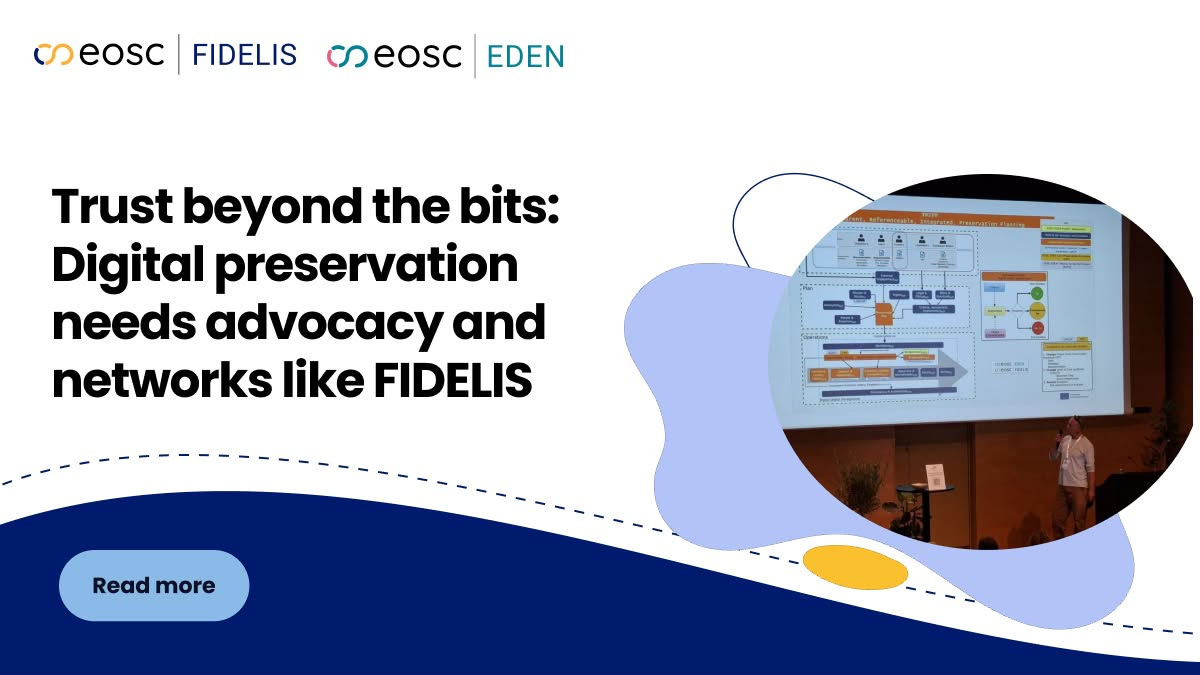
The conference programme covered everything from repository trustworthiness and designated communities to AI, provenance, preservation planning, and digital sovereignty. Yet beneath these diverse topics lay a common concern: how can we ensure that today's digital knowledge is preserved and that future users can trust and reuse it? This question was also central to our poster Transparent, Referenceable, Integrated, Preservation Planning TRIPP. Developed through ongoing collaboration between the EOSC EDEN and FIDELIS projects, TRIPP proposes a structured approach for making repository retention, curation, and preservation practices transparent and referenceable. The goal may seem simple but is actually pretty ambitious!
One area that deserves attention is the preservation of semantic representation information, as defined in the OAIS Reference Model. Digital preservation discussions frequently focus on file formats, storage, and bit-level integrity. These are of course important. But preserving e.g. research data for the long term requires also preserving the information needed to understand what the data means. If bits survive but meaning disappears, preservation has been a waste of resources. Active long-term preservation cannot succeed if it is treated as an optional add-on rather than as critical activity.
Another theme I took away from the conference was that advocacy remains essential. Many repositories operate with limited staff and limited funding. At the same time, expectations continue to grow. Repositories are expected to ensure security and data sovereignty, support FAIR data, respond to technological change, and provide trustworthy stewardship over decades. The repository community therefore needs to continue making a stronger and more visible case for long-term stewardship and preservation of digital objects. Advocacy is far more effective when repositories speak together rather than individually. This is also one of the reasons why we need the FIDELIS Network in Europe. In an era increasingly concerned with trust, resilience, and data sovereignty, the importance of trustworthy digital repositories has never been clearer.
Copenhagen provided an ideal setting for iPRES 2026. The city's distinctive sense of hygge created an atmosphere that encouraged discussion, learning, and collaboration. Informal conversations over coffee, during social events, and between sessions reinforced the value of personal connections and professional networks. The conference left me optimistic that we can meet the challenges ahead and strengthen our collective ability to preserve digital objects in a trustworthy way for future generations.