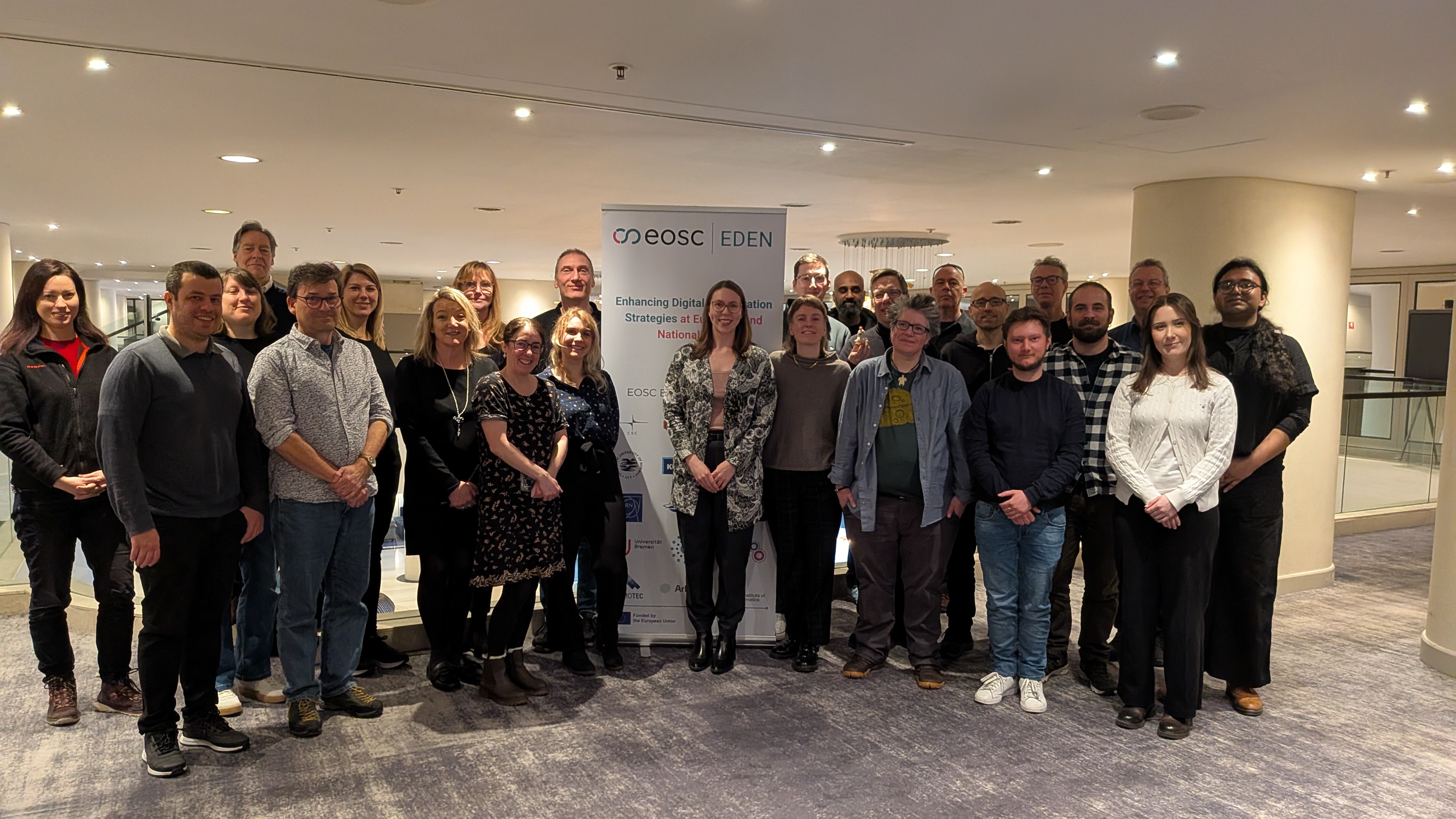
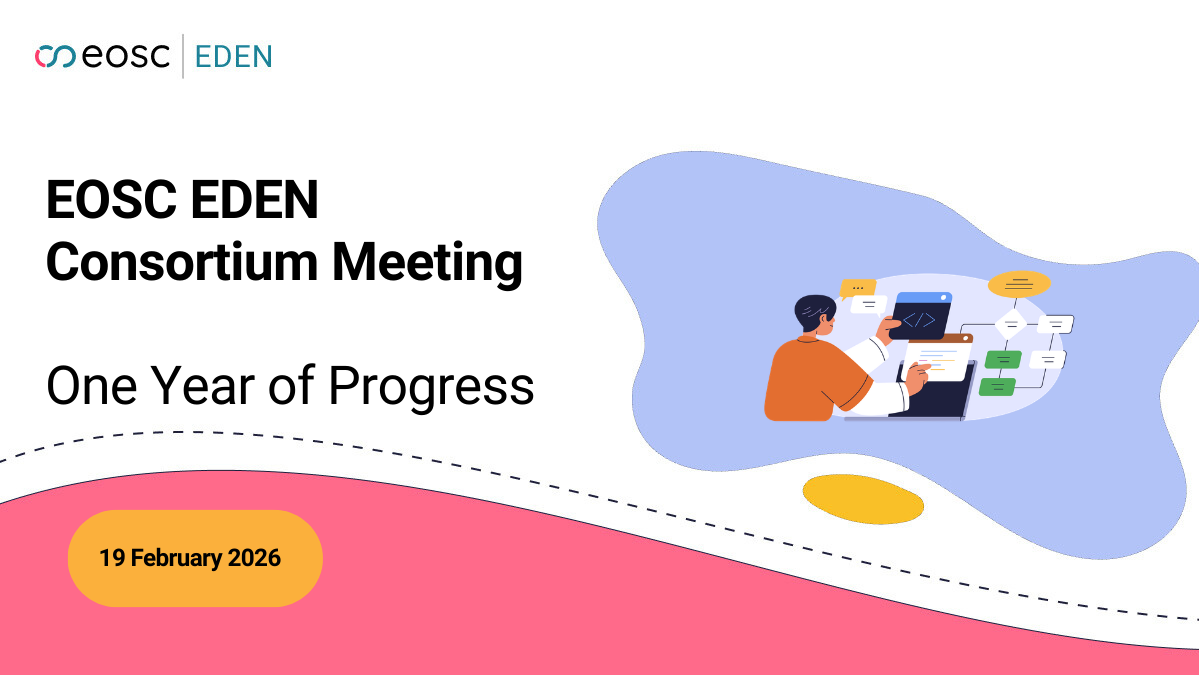
The 20th edition of the International Digital Curation Conference (IDCC26) took place in Zagreb, Croatia, from 16-18 February 2026. Immediately following the conference, on 19 February, members of the EOSC EDEN consortium gathered for a full consortium meeting, attended both in person and online.
When the project began in 2025, the EOSC EDEN consortium brought together partners from different countries, organisations, and areas of expertise. Over the course of the year, both the project and the collaboration between partners have grown significantly.
The day began with a closed session for consortium members to review the second Internal Financial Report. During this session, spending across the various work packages was discussed and the budget outlook for 2026 was presented.
The remainder of the meeting was open to a wider audience and focused on reflecting on the project’s progress during its first year. The central question guiding the discussion was simple but important: Where does EOSC EDEN stand one year after the kick-off meeting?
Work Package leaders then presented updates on their progress and upcoming plans.
Progress Across the Work Packages
WP1: Understanding Long-Term Preservation Needs
One of the first activities of the project at the beginning of 2025 was a comprehensive survey that helped identify key challenges in long-term data preservation. One notable finding was the wide range of preservation expectations: in some cases, data may need to be preserved for 10 to 100 years.
The survey also revealed that quality checks are typically performed only at the point of ingest, with just 27.6% of respondents reassessing data quality at a later stage.
These insights helped inform the development of 30 Core Preservation Processes, which were published and shared widely across the community. In 2026, WP1 will continue building on this work by defining quality metrics and linking them to these preservation processes.
WP2: Developing Tools and Services
WP2 is focusing on the technical side of long-term preservation. The team began by aligning project attributes with established vocabularies to ensure consistent interpretation across systems and communities.
A detailed review of existing long-term access and preservation services has also been carried out. The aim is to define standards and protocols for submitting and exchanging Information Packages, as well as to create a registry of long-term preservation services.
The first iteration of the specification has already been completed, and further developments are planned for 2026, including work on the EDEN/FIDELIS Registry.
WP3: Mapping Community Needs
During 2025, WP3 carried out extensive desk research to map existing requirements across repositories and discipline-specific communities.
Through interviews with repository managers and researchers, the team gathered valuable user stories, community norms, and expectations. These insights helped them develop detailed user journey maps describing how data preservation currently works in practice.
Next, WP3 will define discipline-specific object requirements, validate them through pilot testing, and support adoption through the development of a dedicated support toolkit.
WP4: Communication and Community Engagement
Communication and outreach activities have also been a key focus. Early in the project, it became clear that EOSC EDEN was closely aligned with the FIDELIS project. As a result, the two initiatives decided to collaborate on a shared website and adopt a similar visual identity for external communication.
A new website, branding materials, templates, visuals, and a project poster have all been developed. The team has also organised the first webinars, bootcamps, and workshops, while presenting the project at external events such as the 2025 Dataverse Community Meeting, iPres, and other conferences.
These activities, together with ongoing social media engagement, will continue to expand the project’s reach. Future plans include the creation of working groups focused on specific stakeholder communities.
WP5: Coordination and Strategic Alignment
WP5 oversees the overall coordination and sustainability of the project. In 2025, the team ensured that the Consortium Agreement was signed by all partners correctly and on schedule.
Together with the FIDELIS project, WP5 also organised the first project kick-off meeting, which brought many consortium members together in person for the first time.
Another important activity was the identification of Key Exploitable Results (KERs). These results were mapped against relevant strategic initiatives and will be further aligned and developed during 2026.
Collaborative Workshops
Three workshops were organised during the consortium meeting to explore specific topics in greater depth.
The WP1–WP3 workshop focused on the File Format Identification Service specification as an example of a service that could be developed within the project. Participants voted on key topics for discussion, with the top priorities including:
- identifying the necessary steps across WP2 and WP3
- understanding how the service connects to WP1 outcomes
- determining what information needs to be exchanged between work packages
The discussion also highlighted the importance of clear terminology, particularly the distinction between services and tools.
The second workshop explored the project’s key stakeholders. Ten stakeholder groups have now been identified, and engagement priorities have been set. Participants were invited to help connect with these communities. It was also noted that organisations outside the research sector—such as banks, may also benefit from the project’s outputs.
In the third workshop, participants discussed the long-term impact of the project by identifying Key Exploitable Results (KERs) that could continue generating value after the project ends. Small breakout groups explored potential KERs for each work package and discussed which organisations might host or sustain the network in the future.
Participants were also able to submit questions and feedback throughout the workshops using Mentimeter. These contributions will now be analysed by the work package leaders.
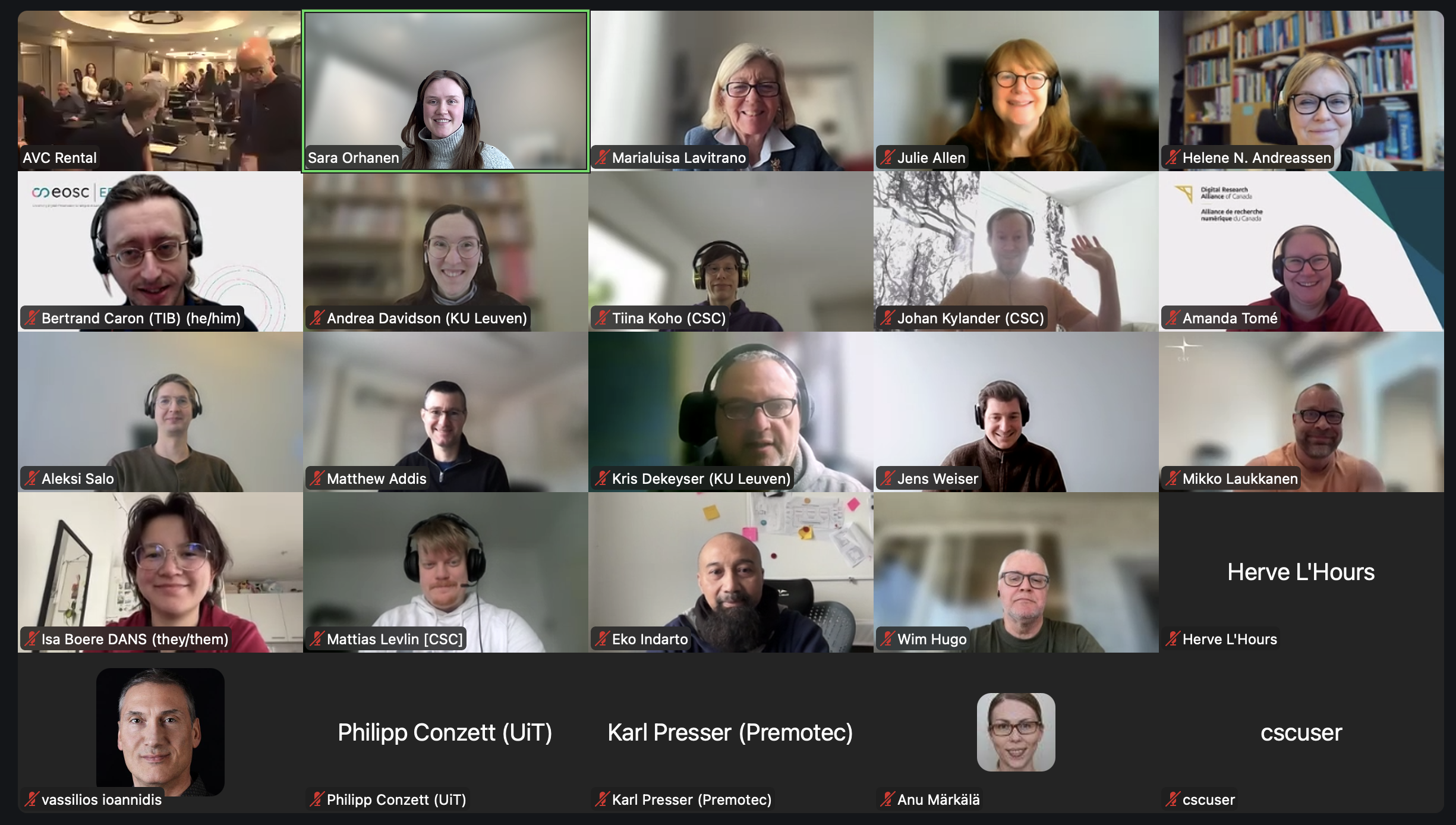
A Strong First Year
Consortium members have presented the project at numerous conferences, workshops, bootcamps, and webinars, sharing early results and engaging with the wider community.
After just one year, the progress achieved is impressive. With strong foundations now in place, the consortium looks ahead to an exciting second year of development.
Well done to everyone involved in EOSC EDEN — and here’s to a productive 2026!